袄裙的第一缕锦纹绣着华夏风骨裁就千年,这份凝聚着中式服饰智慧与审美底蕴的衣制,便以“袄短藏秀、裙长曳雅”的形制,铺展了东方雅致里的“衣袂风华”。它是中华传统服饰中最懂以形传韵的“流动诗卷”,既将锦缎之华融于节庆的盛装、日常的娴雅,也以“盘扣凝巧、纹样寄情”的精巧工艺,揉着庭榭的温婉与松竹的俊逸,藏着衣冠文明的传承与天人合一的哲思。
今天,就让我们一同踏入袄裙的锦绣天地,品味这份织在针丝经纬里的文化根脉吧!本期让我们跟随商务英语2506班费静怡同学的脚步,穿梭于绣着缠枝莲纹的朱门院落与飘着罗绮暗香的古韵市集,感受这份独属于袄裙的温婉与隽永。
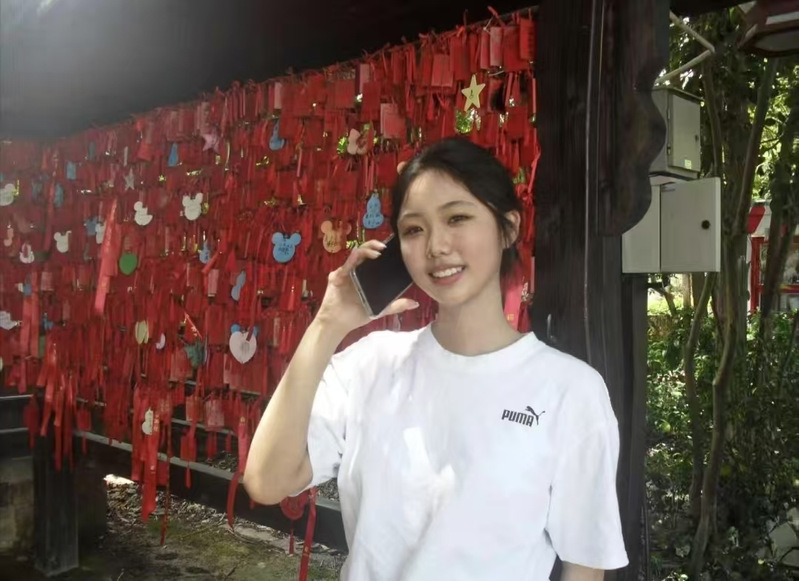
大家好,我是来自商务英语2506班的费静怡,我喜欢摄影,绘画。
Aoqun
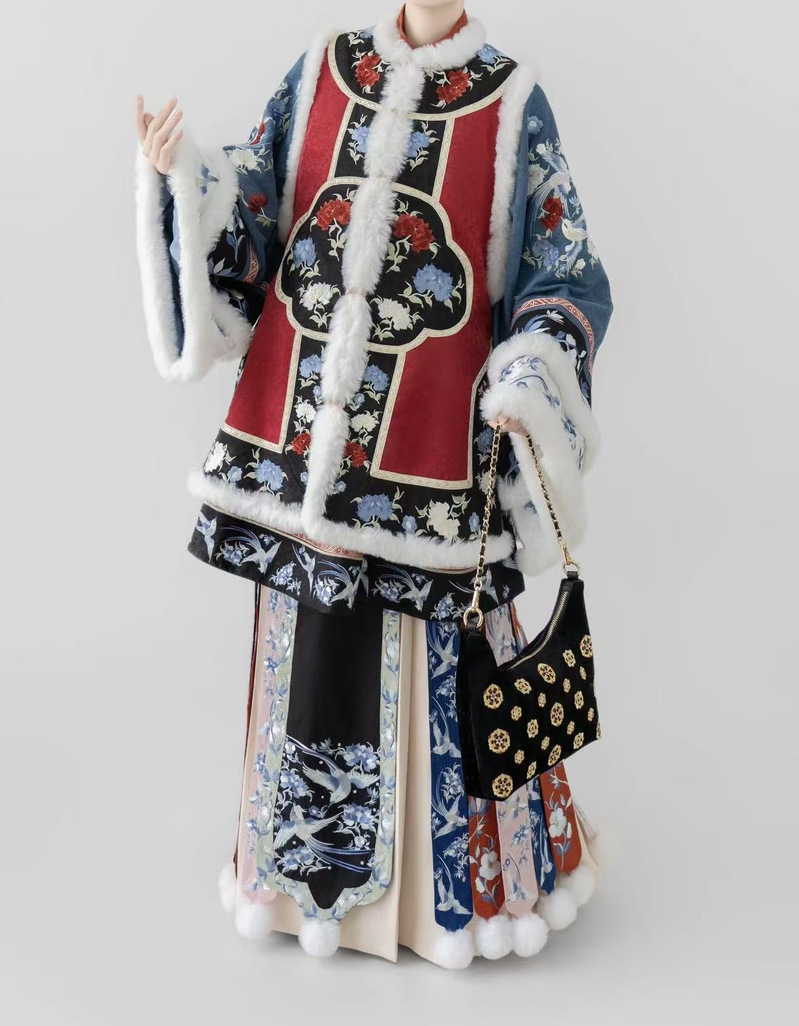
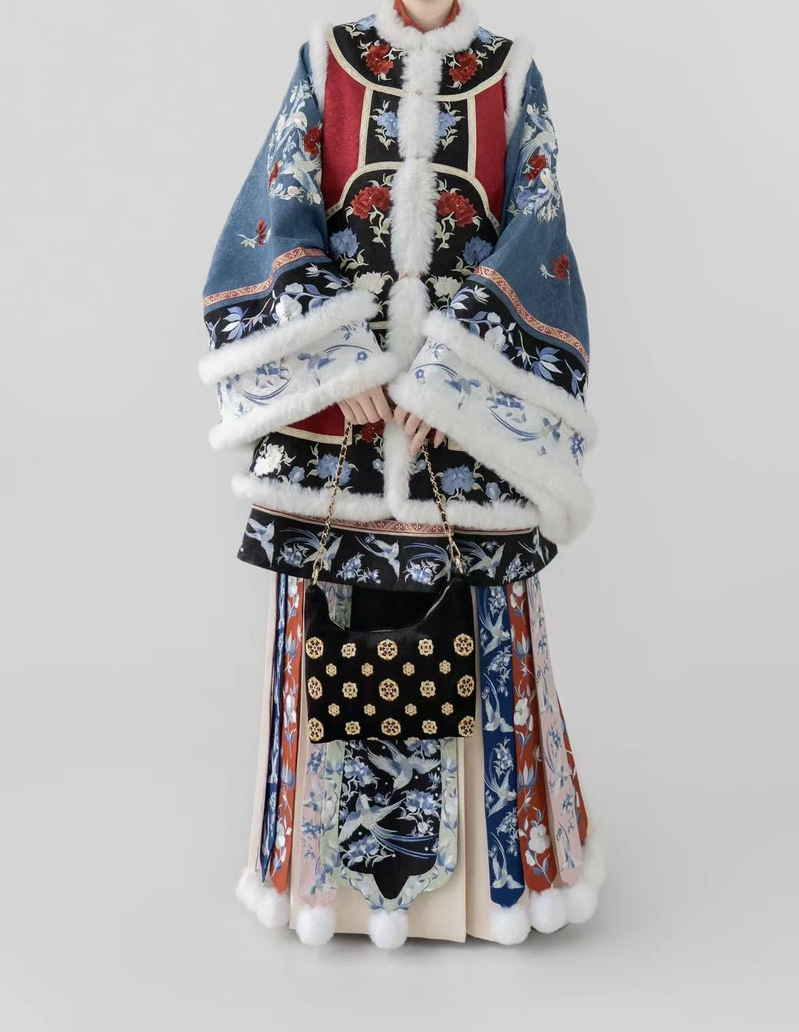
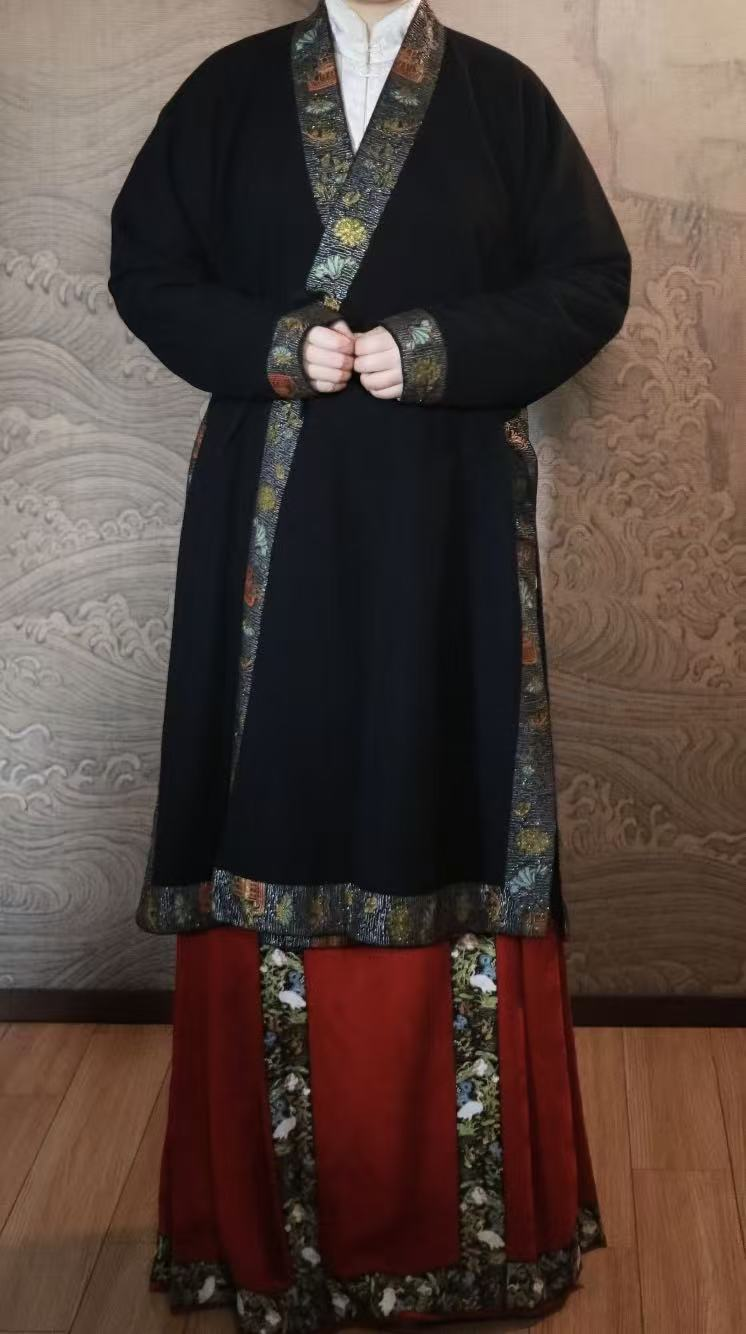
In the Ming Dynasty, women's Hanfu clothing is very popular in the form of clothes cover skirt way of dress, the most common Aoqun (袄裙) is a Ming Dynasty women's clothing general term, that is, the upper Ao (袄, jacket) with the lower Qun (裙, skirt) with the way, and not a single piece of clothing. The Ao in this section refers to a cross-necked female top, and the Qun refers to a Mamian Qun (horse-face skirt).
Early Hanfu tops were mostly called Ru (襦), and after the Wei and Jin Dynasties, they were also called Ao and Shan (衫, shirt). Nowadays, it is generally considered that the Aoqun is longer and covers the waist of the skirt, while the one that requires the clothes to be tucked into the waist of the skirt is the Ruqun (襦裙), but both belong to the Ruqun system.
The Ming-style Aoqun are unique and belong to the mid-waist Ruqun system, which is typical of Shangyi Xiachang (上衣下裳); the outer garment is mostly a pipa sleeve with a narrower sleeve edge (2-3 cm), and the collar is usually white with a collar guard; the lower garment can be a Mamian Qun or a normal pleated skirt.
If the top of the Ao is lengthened to cover the knees, it can be called a Da Ao. For ease of movement and aesthetics, the top of the Ao is slit on both sides, generally to the crotch and ease of movement.
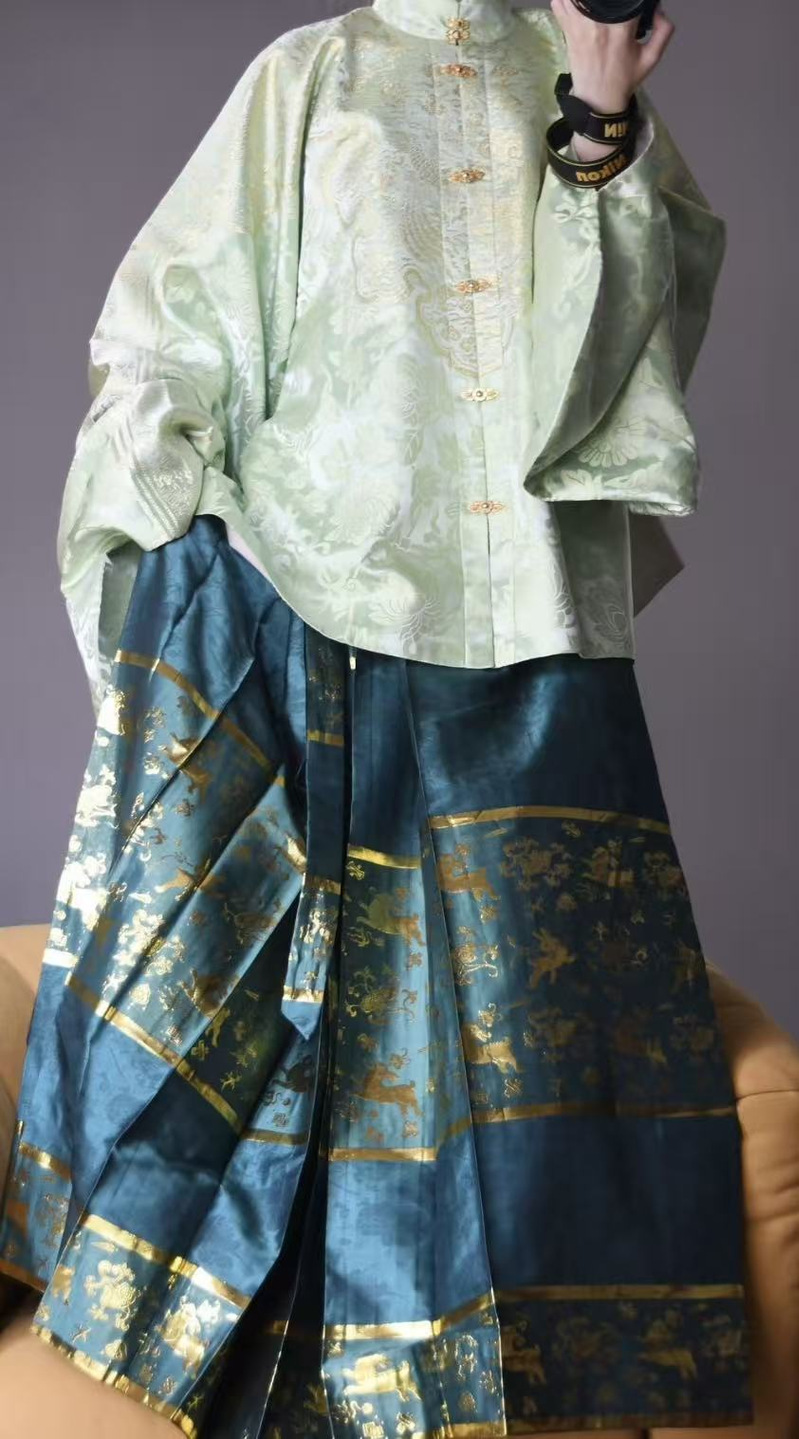
Mamian Qun is actually made up of two separate skirt pieces that are joined together by a skirt waist, but the two pieces are only partially overlapped and not sewn together directly.
The skirt is not pleated on the left or right side, but is pleated in the middle, with the root of the pleats sewn into the waist of the skirt, and ties are sewn on both ends of the waist, the unpleated parts are overlapped and the pleated parts are naturally spread out, and the number and size of the pleats are based on the actual waist circumference.
本文摘录自新汉服网 2021-05-04
袄裙
明代女子汉服中,“上衣下裙”的穿搭形式十分盛行,最常见的“袄裙”是明代女子服饰的统称,即上身穿“袄”、下身着“裙”的搭配方式,并非单一形制的服装。此处的“袄”指交领女式上衣,“裙”则多为马面裙。
早期汉服的上衣多称“襦”,魏晋以后也出现“袄”“衫”等称谓。如今普遍认为,袄裙的上衣偏长,可覆盖裙腰;而需将上衣掖入裙腰的则为襦裙,二者同属襦裙体系。
明制袄裙形制独特,属于中腰襦裙体系,是典型的“上衣下裳”形制;外衣多为琵琶袖,袖缘较窄(宽2-3厘米),衣领常配白色护领;下装可搭配马面裙或普通褶裙。
若将袄的衣长加长至及膝,可称为“大袄”。为方便活动且兼顾美观,袄的两侧会开衩,通常开到胯部位置。
马面裙实则由两块独立裙片通过裙腰连接而成,两片裙片仅部分重叠,并非直接缝合。
裙身左右两侧不打褶,仅中间部位打褶,褶根缝于裙腰处,裙腰两端缝制系带;未打褶的部分相互重叠,打褶的部分自然舒展,褶子的数量与大小根据实际腰围而定。
Garment 服装
Typical 典型的
Circumference 周长
Overlap 重叠
Sew 缝
Pleat 褶裥
Join 连接
Edge 边缘
Aesthetic 审美的
Question 1: What is the exact definition of Aoqun in the Ming Dynasty?
A. A single piece of women's Hanfu with pipa sleeves
B. A general term for the combination of upper Ao and lower Qun
C. A special kind of Mamian Qun with many pleats
D. A long Da Ao that can cover women's knees
Answer:B
解析:答案对应原文第一段。该段明确说明“the most common 'Aoqun' is a Ming Dynasty women's clothing general term, that is, the upper Ao with the lower Qun with the way, and not a single piece of clothing”,即袄裙是上袄下裙搭配形式的统称,并非单件服饰。A选项“a single piece of women's Hanfu”与原文相悖,C选项将袄裙等同于马面裙,概念混淆,D选项大袄只是袄的一种加长款式,并非袄裙的定义,故排除。
Question 2: What is the main difference between Aoqun and Ruqun in modern cognition?
A. Aoqun belongs to Hanfu while Ruqun does not
B. Aoqun is for Ming Dynasty only while Ruqun is for all dynasties
C. Aoqun’s upper part is longer to cover the skirt waist while Ruqun’s is tucked in
D. Aoqun has pipa sleeves while Ruqun has no sleeves at all
Answer:C
解析:答案对应原文第二段。该段指出“Nowadays, it is generally considered that the Aoqun is longer and covers the waist of the skirt, while the one that requires the clothes to be tucked into the waist of the skirt is the Ruqun”,这是现代认知中袄裙和襦裙的核心区别。A选项与事实不符,二者均属于汉服,B选项“only for Ming Dynasty”表述绝对,襦裙也并非适用于所有朝代,D选项“Ruqun has no sleeves at all”无中生有,原文未提及,故排除。
Question 3: Which of the following statements about Mamian Qun is correct?
A. It is made of a single whole skirt piece with no overlaps
B. Its pleats are sewn at the root and the number depends on waist circumference
C. It has many pleats on both left and right sides of the skirt
D. It is connected with the upper Ao to form a single piece of clothing
Answer:B
解析:答案对应原文最后一段。该段说明“the root of the pleats sewn into the waist of the skirt...the number and size of the pleats are based on the actual waist circumference”,即马面裙褶裥根部缝入裙腰,褶数依腰围而定。A选项“a single whole skirt piece with no overlaps”与“made up of two separate skirt pieces that are joined together...only partially overlapped”矛盾,C选项“pleats on both left and right sides”与“The skirt is not pleated on the left or right side”相悖,D选项“connected with the upper Ao to form a single piece”与袄裙是上袄下裙搭配、非单件服饰的定义冲突,故排除。